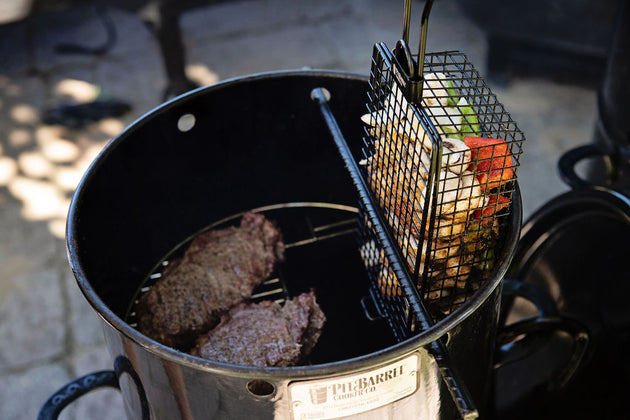


The Hidden 5-Year Cost
Of Owning A
Pellet Grill
Pellets. Electricity. Controller failures. Auger replacements. The sticker price is just the deposit. Here is the honest math.
Pellet grills look like a smart purchase on the showroom floor. The digital controller, the convenient hopper, the promise of set-it-and-forget-it cooking. But the sticker price is only the beginning of what you actually pay over the life of the cooker. Pellets, electricity, replacement parts, and eventual controller failures add up to a real number that most pellet grill buyers never calculate. Here is the honest math on what a pellet grill actually costs over five years of regular use.
01 / The DepositThe Sticker Price Is Just The Deposit
Most quality pellet grills cost between $700 and $2,000 new. Premium models exceed $2,500. The Pit Barrel Cooker lineup, by comparison, ranges from approximately $329.99 for the Pit Barrel Junior to around $600 for the largest PBX. Right out of the gate, the entry cost favors charcoal cooking. But the long-term math is even more revealing when you account for everything else pellet grill ownership involves.
02 / FuelPellet Costs Add Up Faster Than You Think
Quality BBQ pellets cost approximately $1 to $1.50 per pound at retail. A standard pellet grill burns 1 to 3 pounds of pellets per hour, depending on temperature setting and weather. Over a year of regular weekend BBQ cooking (say, 50 cooks averaging 6 hours each), you will burn 300 to 900 pounds of pellets. At even $1 per pound, that is $300 to $900 per year just in fuel. Over 5 years, pellet fuel alone runs $1,500 to $4,500.
03 / ComparisonCharcoal Fuel Costs
The Pit Barrel Cooker runs on standard charcoal available at any grocery store or hardware store. A 20-pound bag of quality lump or briquette charcoal costs approximately $20 and lasts for 3 to 4 full cooks on the Pit Barrel. For the same 50 cooks per year, you would buy approximately 13 to 17 bags of charcoal, totaling $260 to $340 per year. Over 5 years, charcoal fuel runs $1,300 to $1,700, less than half the cost of pellet fuel. The savings on fuel alone covers a Pit Barrel Cooker multiple times over.
04 / PowerElectricity Is Real Money
Pellet grills require electricity to run the auger, controller, ignition system, and combustion fan. Power draw averages 200 to 500 watts during operation, with brief spikes during ignition. Over the same 50 cooks per year averaging 6 hours, that adds up to roughly $20 to $50 per year in electricity costs. Not huge, but real money over 5 years. The Pit Barrel Cooker requires zero electricity, which also means it works during power outages, at campsites, and in tailgate parking lots where pellet grills cannot be used.
05 / FailuresController Failures Are Common And Expensive
The electronic controller is the most failure-prone component on any pellet grill. Most controllers last 3 to 5 years of regular use before failing, sometimes sooner. Replacement controllers cost $150 to $400 depending on brand and model. For pellet grill owners keeping their cookers more than 5 years, factor in at least one controller replacement. The Pit Barrel has no controller, no electronics, and nothing that can electronically fail.
When the controller fails. And it will, usually somewhere between year three and year five. You then have two real options: pay $150 to $400 for a replacement plus installation time, or replace the whole cooker. The Pit Barrel sidesteps this decision entirely. There is no controller to replace because there is no controller.
06 / Wear PartsAuger And Motor Replacements
The auger that feeds pellets from the hopper into the burn pot is another wear part. Augers can jam from moisture-damaged pellets, break from foreign objects, or wear out from normal use. Replacement augers and motors run $50 to $200 depending on model. Over 5 years of regular use, factor in approximately one auger replacement for an honest cost projection.
07 / WastePellet Storage And Waste
Pellets are sensitive to moisture. A bag left outside in humidity or rain absorbs water, swells, and clogs the auger. Pellet grill owners typically lose 10 to 20 percent of their pellets to spoilage and moisture damage, especially in humid climates. That waste adds another effective cost on top of the base pellet price. Charcoal, by comparison, is virtually impervious to weather damage and can be stored outdoors in any condition.
The savings on fuel alone covers a Pit Barrel Cooker multiple times over.
The Honest Math, Side By Side
08 / The Trade-OffWhat You Actually Get For The Extra Money
Pellet grill owners paying more than double the total cost of a Pit Barrel are paying for one thing: digital temperature control. That convenience comes at the cost of milder smoke flavor, dependence on electricity, ongoing fuel expense, and predictable electronic failures. The Pit Barrel offers a different set of trade-offs: real charcoal flavor, no electricity required, minimal ongoing costs, and a design simple enough to last over a decade with basic care. Both are honest choices, but the long-term financial picture favors charcoal dramatically.
09 / The PromiseSet-It-And-Forget-It Without The Digital Controller
The biggest selling point of pellet grills is hands-off cooking. The Pit Barrel offers the same hands-off experience through different means. Pre-calibrated air vents self-regulate temperature for 6 to 8 hours per load of charcoal without any electronic intervention. Light it, hang your food, walk away. The Pit Barrel does what pellet grills promise to do, without the electronics that eventually fail.
Skip The Controller.
Cook With Real Fire.
No subscriptions. No replacements. No surprises. Just BBQ.
Shop The Pit Barrel →